Mar 25, 2026
What to Do in Joshua Tree with Kids
The desert is better with kids than most parents expect. Joshua Tree National Park looks like another planet, and children — unburdened by the adult instinct to treat natural wonders as Instagram backgrounds — tend to engage with it with a kind of full-body enthusiasm that reminds you why the place is worth visiting in the first place. The giant boulders are a natural climbing gym. The alien-looking trees are genuinely alien-looking. And the night sky, away from city light, delivers the kind of awe that is hard to manufacture any other way.
With some basic planning, a family weekend in Joshua Tree is not just manageable — it is one of the better trips you can take with children in Southern California. Here is what actually works.
The Right Time to Visit
This matters more for families than for adults traveling without kids. The desert in summer regularly exceeds 105 degrees, which makes outdoor activity dangerous for children and genuinely unpleasant for everyone. Aim for October through April. Spring is the best season — wildflowers bloom from late February through April depending on rainfall, daytime temperatures sit in the 70s, and the evenings are cool without being cold. Fall is a close second: fewer crowds than spring, crisp air, and dramatic light.
Winter weekends are underrated for family trips. The park is quiet, the air is cold and clear, and a jacket-weather hike followed by hot chocolate at the house has a particular appeal that summer cannot offer. Avoid holiday weekends in any season — the park entrance lines get long and the better trailheads fill up early.
Hikes That Actually Work for Families
The key with kids is short distances, interesting things to look at, and a clear endpoint that feels like an achievement. Joshua Tree National Park has several trails that tick all of these boxes.
Barker Dam Trail (1.3 miles, easy). This is the best family hike in the park. The trail loops around a seasonal lake created by an old cattle ranching dam, passing through boulder formations and native vegetation. When the lake has water — typically after winter rains — it reflects the surrounding boulders and creates one of the more striking scenes in the park. Kids can clamber on rocks the whole way. The trailhead is clearly marked and the parking area is manageable.
Skull Rock Nature Trail (1.7 miles, easy). Named for a boulder formation that genuinely resembles a skull, this trail loops through some of the park's most dramatic rock scenery. The interpretive signs along the route explain desert ecology in accessible terms, which helps if you have kids who ask a lot of questions — which is most of them. The Skull Rock itself, right off the main road, makes a good photo stop that children actually want to pose for.
Hidden Valley Trail (1 mile, easy). A short loop through a natural rock enclosure that legend holds was used as a cattle rustler's hideout in the nineteenth century. The enclosed valley creates a sheltered microclimate that supports more vegetation than the open desert, and the ring of boulders gives the whole place a slightly theatrical quality. Young kids respond well to the sense of discovery when you step through the entrance rocks.
Cholla Cactus Garden (0.25 miles, easy). Not a hike exactly — more a short interpretive loop through a dense stand of jumping cholla cactus. The density of the cactus field is genuinely striking. Do brief children on the jumping cholla's ability to attach itself to skin via barbed spines before you go in. Watching carefully and looking without touching is a useful skill to practice. The loop is flat and takes about fifteen minutes.
Beyond the Park
Gem mining in Pioneertown. Several claims in the Yucca Valley and Pioneertown area offer pay-to-dig gem mining experiences where children sift through sand and gravel to find rough gemstones they get to keep. The geology of the high desert makes this more than a gimmick — the area has genuine deposits of tourmaline, garnet, and quartz. It is a long afternoon activity that holds attention well and sends kids home with something tangible.
Pioneertown itself. The former movie set is worth a walk even if you are not staying for dinner. Mane Street — the original Western set street — still looks largely as it did in 1940s Westerns, and children tend to respond to the theatrical artificiality of it with exactly the right spirit. Pappy & Harriet's serves food early enough for families, and the outdoor stage often has afternoon entertainment on weekends.
Integratron sound bath. This is for families with older children — the Integratron in Landers, about twenty minutes from the park, offers sound healing sessions inside a resonant wooden dome built in the 1950s by a man who claimed to have received its design from extraterrestrials. The sessions are genuinely relaxing, the architecture is bizarre, and the extraterrestrial backstory lands well with kids old enough to appreciate it. Book in advance.
Stargazing. This should be on every Joshua Tree family itinerary. The Milky Way is visible on clear nights away from artificial light, and the park's dark sky designation makes it one of the better accessible stargazing locations in Southern California. Download a free star chart app before you go, bring a red flashlight (white light destroys night vision), and give your eyes twenty minutes to adjust after you cut the lights. Children who have never seen a genuinely dark sky tend to go quiet in a way that is worth remembering.
Where to Stay with a Family
Families visiting Joshua Tree need space, a private outdoor area, and proximity to the park without being in the middle of tourist infrastructure. The short-term rental market in Yucca Valley and the surrounding area has grown substantially in the past few years, and the quality range is wide — from thoughtfully designed family retreats to hastily converted vacation homes that photograph better than they live.
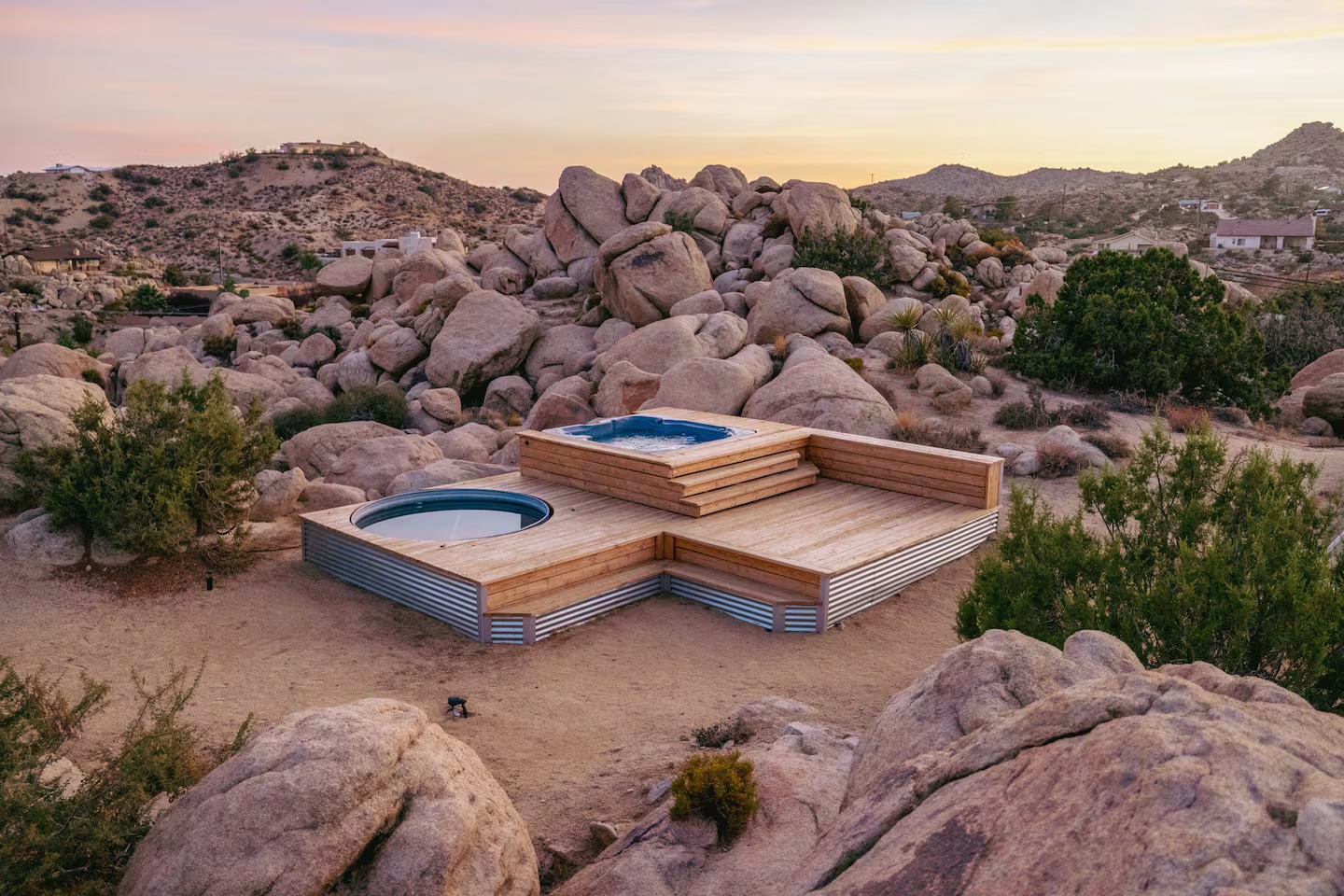
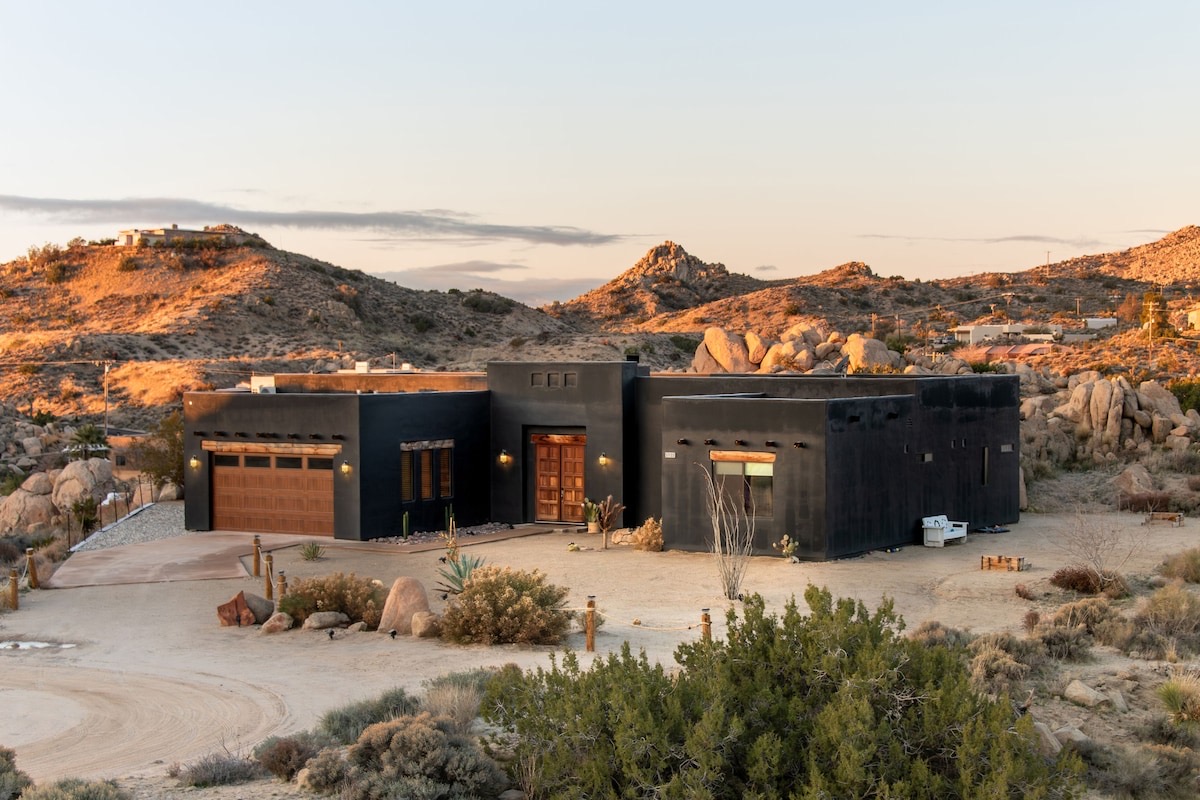
House of Kuna, our property in Yucca Valley, was designed for exactly this kind of trip. Three bedrooms and two and a half bathrooms across a desert-modern layout, sleeping up to eight — which fits most family configurations without anyone on a pullout. The outdoor space is private and fully usable, and the location in Yucca Valley puts you ten minutes from the park's west entrance and close to town for grocery runs and coffee.
We built House of Kuna with families in mind — the kind of place where kids can be kids and adults can actually relax at the same time. You can book directly at houseof.cc/house-of-kuna. Direct bookings come with our best rate and no platform service fees.
Practical Notes
Water. The desert is dry in a way that sneaks up on children who are used to humidity. Bring more water than you think you need and remind kids to drink before they feel thirsty. A good rule is a liter per person per hour of outdoor activity in warm weather, more in heat.
Sun protection. Wide-brim hats, SPF 50 sunscreen applied before you leave the house, and a UV-protective layer for kids who burn easily. The desert sun is direct and there is very little shade on most trails.
Snacks. Hike timing works better with a snack thirty minutes in rather than at the car. Keep something in a daypack and you will avoid the premature turnaround that cuts most family hikes short.
Early starts. In warm weather, plan outdoor activities for 7 to 10 a.m. and again after 4 p.m. The middle of the day is better spent at the pool or inside. This is not a hardship — early desert light is the best desert light, and kids who wake up early anyway can use that energy productively.
Joshua tree etiquette. The trees are protected and remarkably slow-growing — some of the large specimens in the park are hundreds of years old. Teach kids before you arrive that touching and climbing the trees is not allowed. The rule is easy to explain and worth enforcing.